Putting the "T" in ADMET: Tackling Toxicity with New Funding
Small molecules remain one of the most practical tools for reaching patients in underserved regions. They can be formulated for ambient storage, manufactured at scale and low cost, and taken as an oral pill rather than an injection — unlike many vaccines and biologics, which require cold chain and carry shorter shelf lives. However, that same practicality is accompanied by increased off-target risk: their small size and conformational flexibility let them bind promiscuously to unintended targets, including the hERG channel and aminergic GPCRs.
In drug discovery, safety and toxicology issues account for roughly 30% of clinical trial failures. While assays like hERG patch-clamp screens are routinely used early in lead optimization to flag cardiotoxicity, our fundamental mechanistic understanding of hERG binding is still surprisingly poor. We know when a molecule hits the channel, but designing our way out of liability without destroying on-target potency remains limited. For other off-targets, the problem is different but no less challenging. Aminergic GPCRs sit at the center of every industry-standard secondary pharmacology panel, yet the resulting data are almost entirely proprietary — generated on non-overlapping target sets, under inconsistent assay conditions, and rarely published. For both sets of targets, the assays exist. However, the open, standardized, model-ready data necessary to better understand and solve these liabilities do not.
When safety liabilities force a program to stop in late development, the sunk cost is on the order of a full clinical program. Worse, we often discard the series without capturing the systematic data needed to prevent the same failure in the next project, continuing a cycle that impedes progress for small molecule drug development for everyone.
We are excited to share that OpenADMET has received a grant from the Gates Foundation to address these exact data gaps by focusing on the hERG potassium channel and aminergic GPCRs.
Public Toxicity Data Helps Solve a Global Health Problem
A drug that can disturb heart rhythm is manageable where you can monitor for it — a baseline heart tracing, follow-up tests, blood work, a cardiologist if something looks wrong. Almost none of that is available in underserved regions, where treatment is often delivered by community health workers without continuous monitoring. The risk also runs higher in those patients. Malnutrition and diarrhoeal illness deplete the minerals that keep heart rhythm stable, and people treated for HIV, tuberculosis and malaria are often taking several drugs that each push heart rhythm the same way. As such, global health medicines need wide safety margins. Building in that margin without weakening the drug's effect on the parasite or bacterium is a design problem — and design problems need models that predict, not screens that report failure after the fact.
What we are building
We will apply the same open, data-first approach we developed for drug metabolism to toxicity:
-
Large Functional Datasets: Generating extensive, standardized experimental data across hERG and key aminergic GPCR panels to capture broad chemical diversity.
-
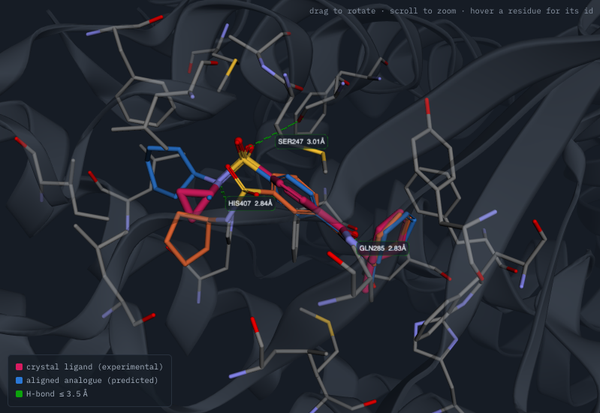
High-Resolution Structural Biology: Solving novel compound-bound structures to map the binding pockets and conformational states that drive off-target engagement.
-
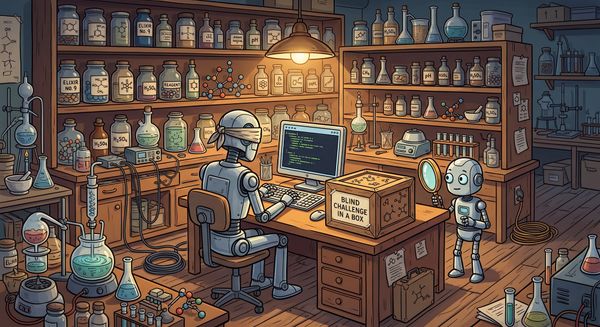
Open Predictive Models and Benchmarks: Releasing datasets, baseline ML models, and running prospective blind challenges so the community can validate predictive safety tools against unbiased ground truth.
Moving forward
Knowing that a molecule has a safety problem is not the same as knowing how to fix it. Closing that gap means cleaner molecules designed earlier — and it matters most for patients whose treatment cannot be monitored or followed up.
We are grateful to the Gates Foundation for supporting this effort to build the foundational data the field needs.
You can keep up with our updates and upcoming dataset releases at openadmet.org.
OpenADMET is supported by the Gates Foundation, ARPA-H (under the AVOID-OME program, Award Number 1AY1AX000035), Radial and the Astera Institute (https://ror.org/00ydx1s47), Schrödinger, and the OpenAI Foundation. We also thank our partners at Enamine, Hugging Face, OpenEye, CDD Vault, Discovery Life Sciences, and the beamline staff at NSLS-II for their ongoing collaboration.