Alchemical methods for antitargets: a showcase of first steps in exploring PXR using RBFE
OpenADMET's experiences with applying physics-based computational models to an antitarget of interest.

Author: Jenke Scheen
DOI: ?
Adverse events can take many forms during drug discovery campaigns. They may appear early in preclinical research, such as unexpected cellular toxicity, or later, such as during human trials. Whatever their timing or consequences, these events usually stem from engaging proteins that were never meant to be touched. These ‘antitargets’ are diverse and vary in notoriety: modern drug discovery uses many screening panels to test candidate chemical matter against them, but the space is too large to cover exhaustively, especially early in a campaign.
This is why initiatives like OpenADMET are essential for building a toolkit for drug discovery scientists. OpenADMET aims to equip the community with a range of models and datasets that thoroughly explore antitarget activity space; see the OpenADMET website for a more detailed mission statement. Because this is a data-driven framework, the obvious modeling approach is machine learning (ML). In fact, OpenADMET's computational blind challenges have drawn a small army of ML scientists who excel at modeling antitarget datasets. But the Achilles’ heel of ML applications in drug discovery shows up here too: drug discovery inherently explores novel chemical matter with no or few close neighbors in existing datasets. As discovery campaigns advance, the space they explore demands greater extrapolative power, something ML models typically lack. This pushes scientists toward physics-based models that are agnostic to novelty, at the cost of computational expense and complexity.
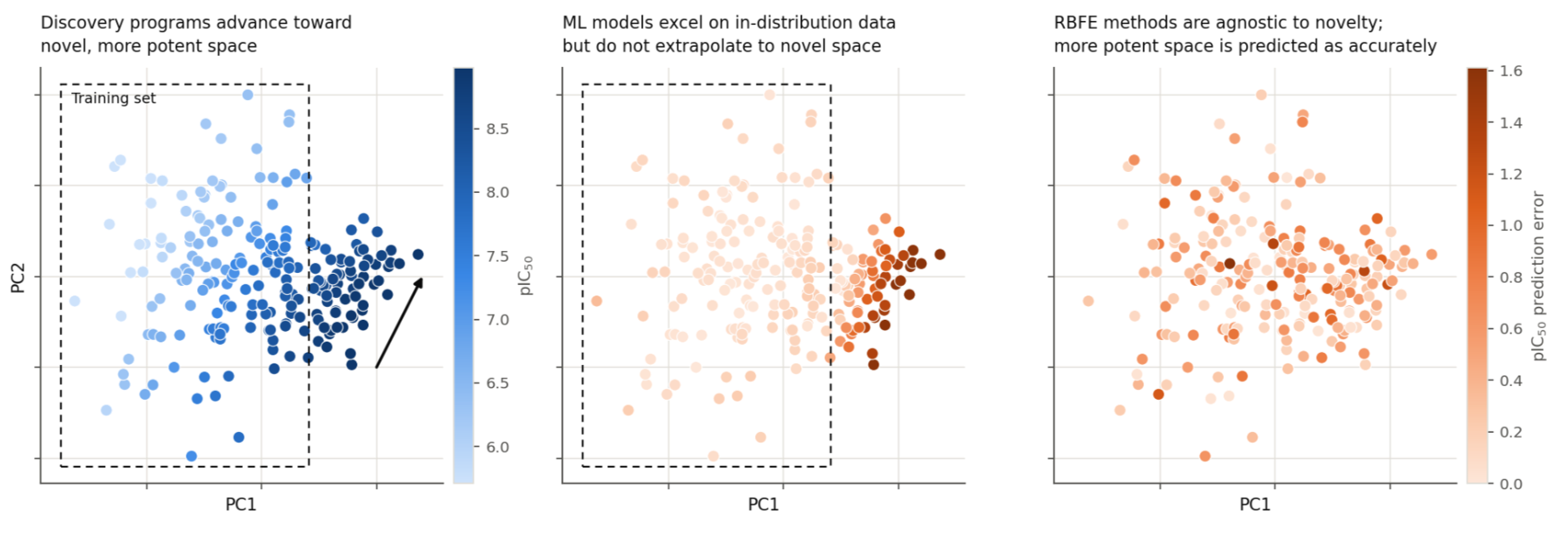
If physics-based models are so awesome, why don’t they dominate OpenADMET’s blind challenges?
Given that physics-based models don’t rely on training sets, you could argue that they are the catch-all solution to any potency prediction problem. We can simply create an accurate computational representation of the physical system (the binding ligand, the target, and any relevant cofactors, water molecules, etc.) in the assay, and then accept the added computational expense as a minor hassle in exchange for amazingly accurate and consistent predictions – right? Except: creating an accurate computational representation of a physical system is practically impossible for two reasons:
- We don’t know enough about molecular biology and chemistry to represent ligand-protein systems accurately. Yes, scientific marvels like X-ray crystallography and cryo-EM show us the structure of these complexes at extremely high resolution; but in reality, millions of other proteins (and many other types of molecules) are floating around and interacting with/ operating on the protein. Even if you’re lucky enough to work on a system where the biology is relatively simple, there are still a host of unknowns that are exceedingly hard to model with respect to their energy contributions: what is the protonation state of each titratable residue? Are any of them (god forbid) at equilibrium at physiological pH? What about flexible loops in the protein that sometimes interact with the ligand? What about molecular crowding, chaperones, and binding partners? What are the ligand's protonation states? The list of unknowns isn't endless, but from where we stand today, it sure looks that way.
- Even if we knew everything, we don’t have the computational oomph to describe molecular systems accurately. We’re lucky to know much about the physics that governs biological systems. Quantum-Mechanical (QM) methods are so advanced that we can solve approximations to the Schrödinger equation for moderately small molecules. Yet these calculations scale abysmally with biological system size, and given today's computers, we have no chance of applying highly accurate QM methods to ligand-protein systems without a fair amount of trickery. By and large, we are forced to coarse-grain the physics all the way down to Molecular Mechanics to at least have a shot at getting some of the physics right for ligand-protein systems.
Playing to the strengths of our current physics knowledge: alchemical free energy methods
As is customary in scientific circles, the near-impossibly complicated challenge of modeling these systems has driven the community to develop a wide range of solutions, each with its own strengths and weaknesses. In this blog post, we focus on alchemical free energy methods, a technique that uses (usually) molecular dynamics (MD) simulations to describe a molecular system's energy landscape over time. Rather than QM, MD uses classical Molecular Mechanics (MM) force fields to describe a molecular system's physical parameters. These are simpler than QM parameters and allow us to sample across timescales from picoseconds to micro- and, in some cases, milliseconds for typical protein-ligand systems. Several alchemical methods exist; here, we focus on relative binding free energy calculations, hereafter referred to as RBFE.
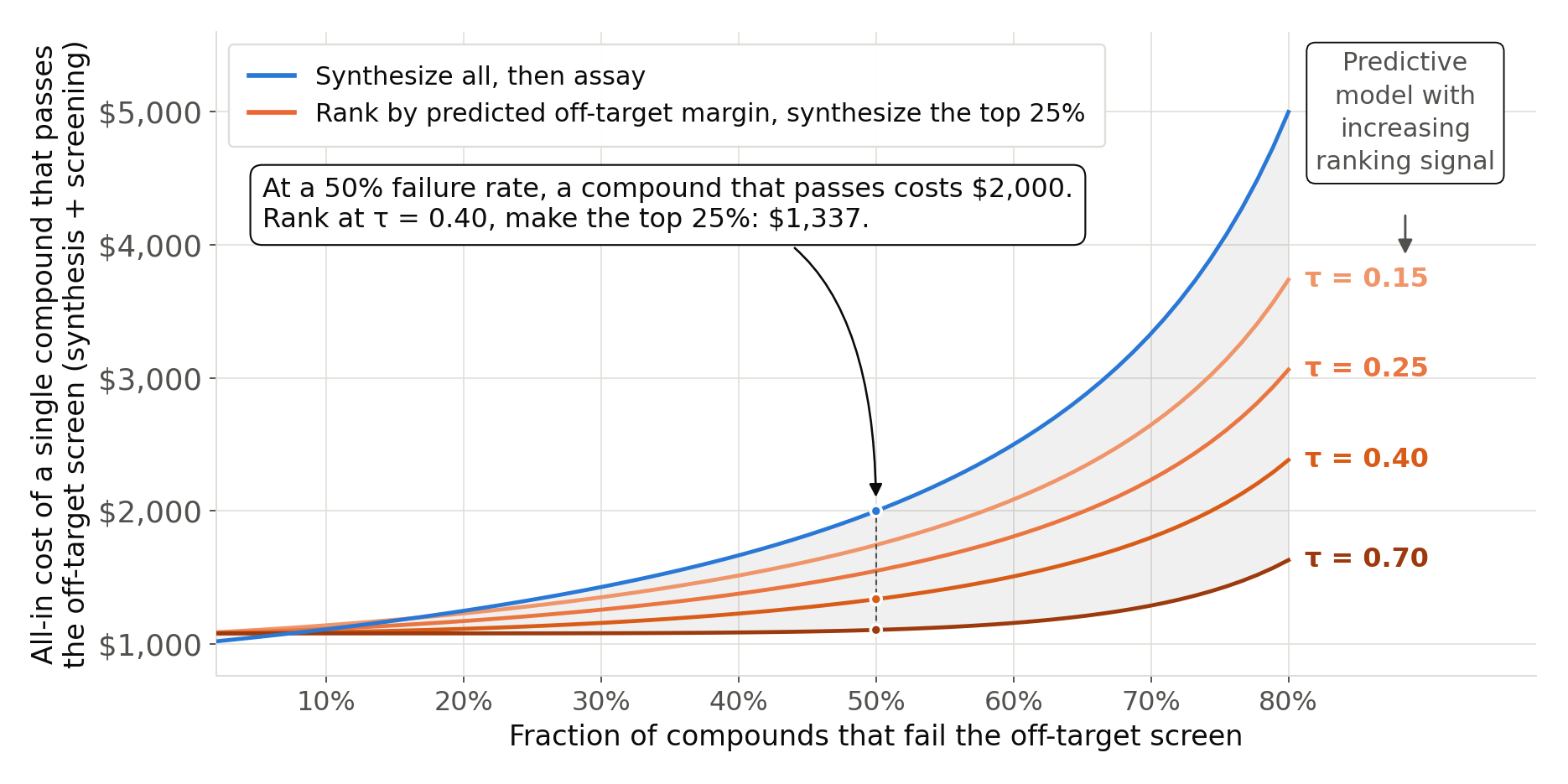
RBFE provides a framework for modeling protein-ligand energetics so we can predict the ligand binding free energy (affinity) to the protein. If the biochemical potency assay used for optimization tracks affinity (as is often the case), we can use these RBFE predictions directly to model the protein's structure-activity relationships (SAR) for congeneric series. That is the strength of RBFE, but the weakness is that the series has to be congeneric, i.e., all ligands need to be chemically close together: ideally consisting of SAR of decorations on a consistent molecular scaffold with fewer than 5-8 heavy atoms difference between the molecules. This renders RBFE exceedingly difficult to apply to hit exploration and hit-to-lead campaigns. Luckily, lead optimization creates exactly this scenario. And the good news is that we don’t even need to be that good at predicting antitarget SAR: even with a predictive model that is moderately good at ranking biochemical potency, we can save ourselves from synthesizing costly compounds.
The future is open (and MIT-licensed)
The Open Molecular Software Foundation (OMSF) hosts many free, open source software projects. Alongside OpenADMET, OpenFE has worked tirelessly to develop several alchemical methods, including RBFE (the RelativeHybridTopologyProtocol). OpenFF supplies the MM force-field parameters and the calculations for this blog post’s experiments to multiple supercomputers through alchemiscale. All simulations in this blog post were performed using free, open source software and run on hardware generously provided by our institutions.
Tracking SAR for antitargets of interest to OpenADMET
We set out to explore RBFE for one of OpenADMET’s targets of interest: the pregnane X receptor (PXR) for which we have recently concluded a computational blind challenge. This is a notorious antitarget in drug discovery campaigns: preclinical campaigns worldwide frequently face selectivity issues related to PXR.
We already described PXR's biological and therapeutic relevance in our blind challenge. In that challenge, participants captured the relationship between the training and test sets, delivering state-of-the-art performance of ~0.65 Kendall’s τ (ranking), along with similarly strong statistical results for correlation and error. The model descriptions mostly report ML methods, with the occasional physics-based implementation scattered throughout. Crucially, no RBFE methods are reported.
The PXR Challenge test set was intentionally designed to be chemically diverse, reflecting OpenADMET’s goal of covering a broad span of chemical space for its selected antitargets. Indeed, when we run the PXR test set through a clustering method that specifically creates RBFE-friendly ‘networks,’ we see clear fragmentation, with only one subseries containing 21 members—enough to support meaningful statistics. Absolute methods such as absolute free energy calculations could tackle the complete test set, but RBFE is the main method in scope for this blog post.
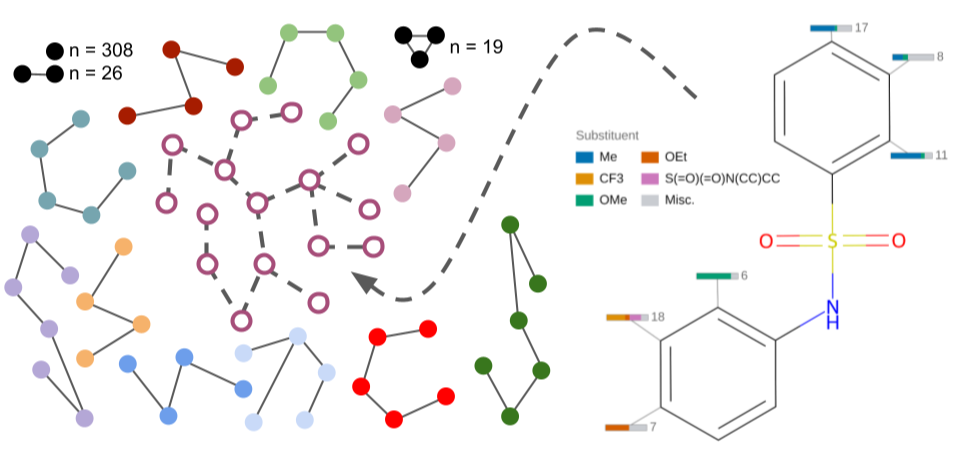
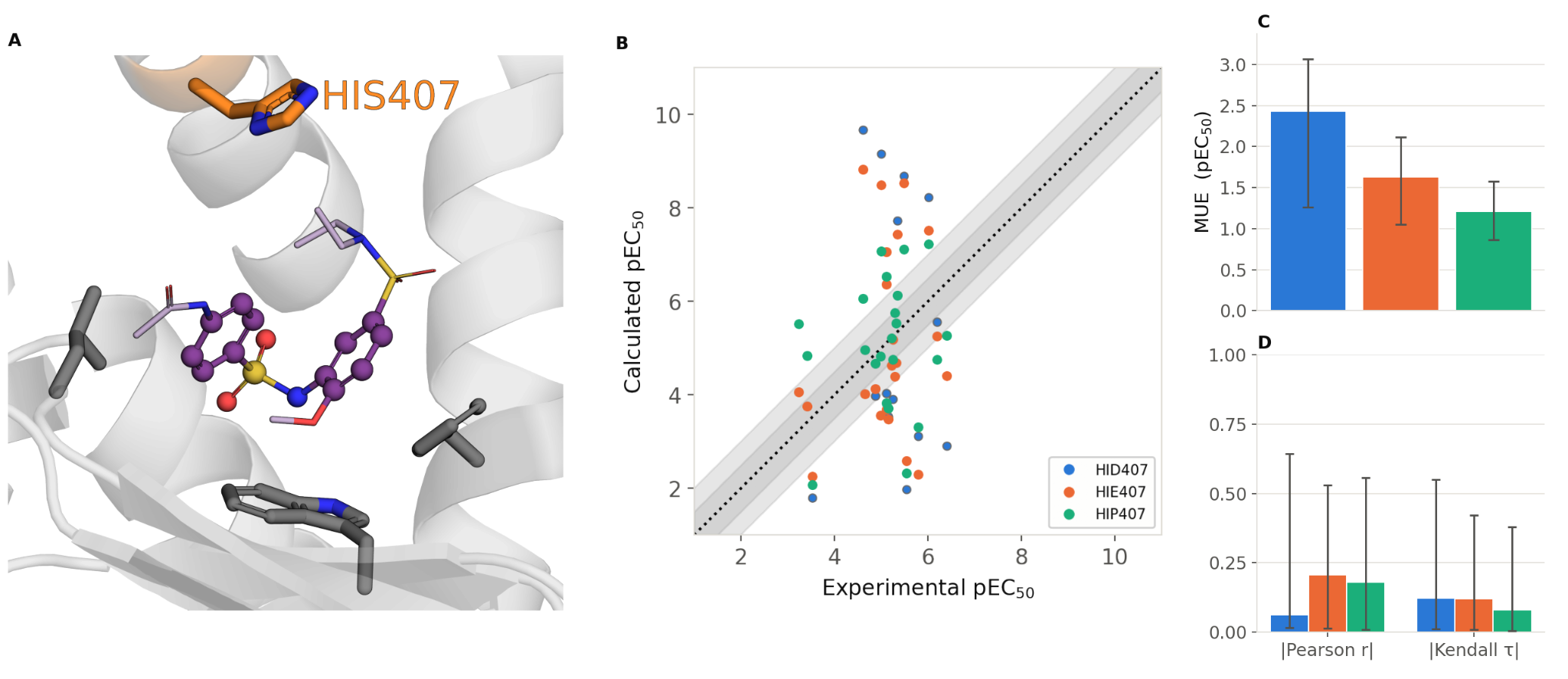
This challenge subseries contains 21 compounds that have decorations on six vectors along a biaryl sulfonamide. Given the experimental structure that the Fraser Lab team at UCSF has resolved for OADMET-0006557 we are able to generate conformers of the remaining 20 compounds of this series trivially; in this case, we used Rowan’s OpenConf implementation to do so. Further, based on observations from the Schrödinger team that worked on this target, we iterated the protonation states of histidine 407 of PXR3. However, despite the high confidence in poses, protonation states, and suitability of this series for RBFE we observe no signal versus experimental potency measurements (Figure 4).
Two factors likely limit our performance on this series. First, receptor flexibility: the PXR binding site can expand considerably upon ligand binding and contains multiple disordered (i.e., highly flexible) loops around the binding site. These features are evidently because of PXR’s biological function in binding diverse xenobiotic chemical matter [1, 2]. Because of the technical nature of RBFE, simulations of the system typically do not exceed 20-30 nanoseconds of sampling time. Changes in binding-site topology are therefore not sufficiently sampled, so the energy contributions are not measured.
The second factor is likely the main culprit. This project's experimental values are pEC50s, measured using Octant’s assay, which employs a cell-based reporter system to measure PXR induction, far removed from the pure ligand-to-protein affinity that RBFE methods model. This assay measures downstream PXR activation (agonism) via transcription. Ligands that bind PXR can be agonists, antagonists, or inverse agonists (OpenADMET will explore this in an upcoming dataset). Given that the relationship between experimental affinities and the agonist pEC50s is indirect, RBFE’s predictions (which directly model affinity) are unlikely to show a strong signal.
Searching for other PXR series with different assay endpoints
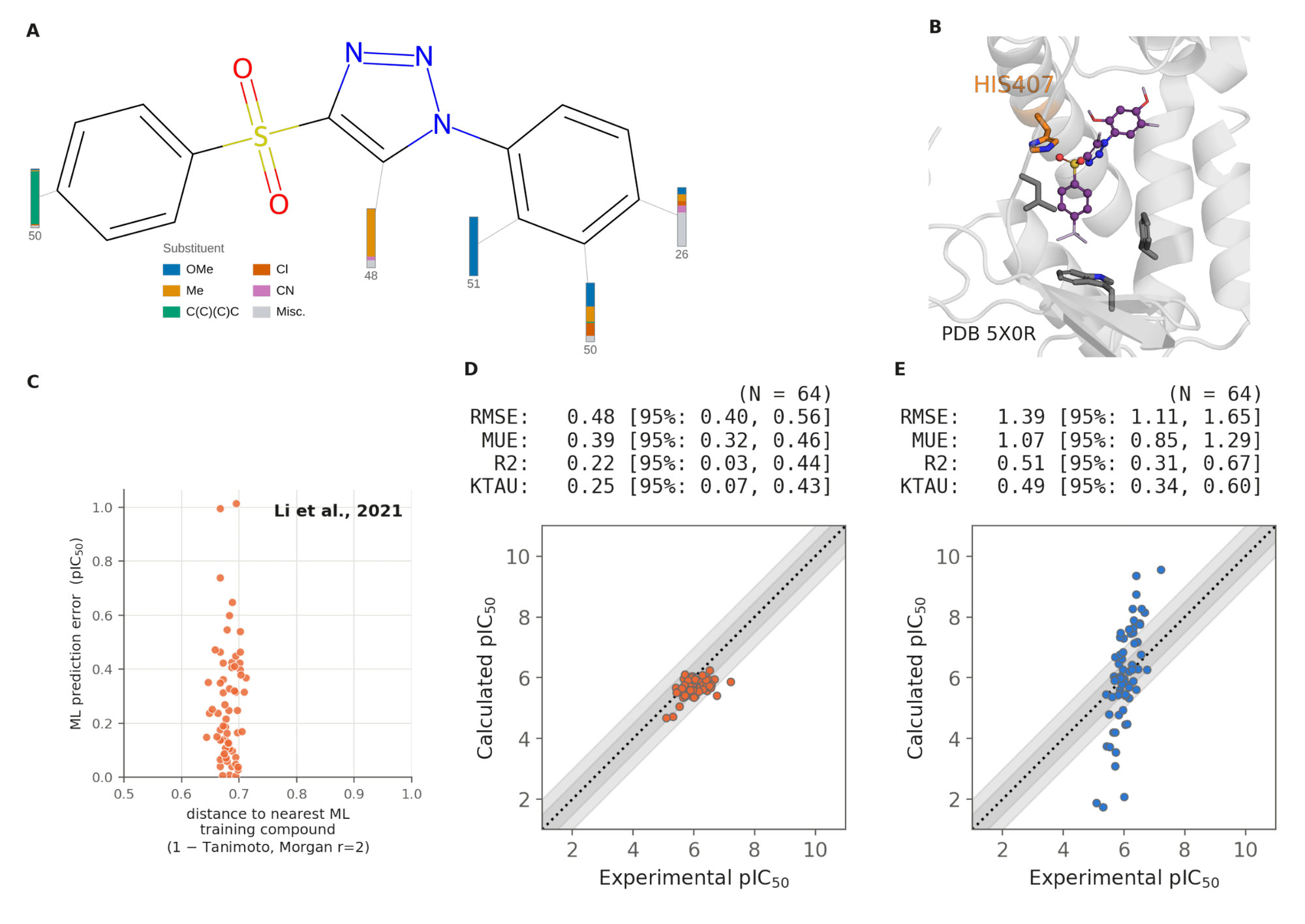
We settled on two series with potentially more suitable assay types to compare our predictions against. First, we found a study by Li et al.1 that builds a PXR compound toolbox. This is a SAR project around close analogues of PDB 5X0R. That means, like with the challenge subseries, we have confident inputs for RBFE poses. However, this time we have a different assay: TR-FRET (OpenADMET is also developing a TR-FRET assay; watch this space!). This biochemical potency measurement is much more likely to have a stronger relationship with pure affinity measurements than cellular measurements do, making it an ideal candidate for RBFE. We also use OpenADMET’s best-effort ML model from the past blind challenge on PXR: we observe that the Li et al. series have no close matches in the ML model training set and also are not predicted well by existing OpenADMET open source models. Instead, the ML model predicts the mean, typical behavior when it extrapolates outside its training distribution.
We observe that RBFE shows a poor signal for this set (Figure 5). Strictly speaking, it doesn't look like the random predictions we saw for the challenge subseries, but it still fails to capture the spread of the experimental measurements' dynamic range. The experimental dynamic range of this series is relatively small (roughly two log units), which isn't ideal but isn't impossible for RBFE to capture. Encouragingly, the statistical performance of this series looks much better than for the challenge subseries. With a set this large (n=64), we can confidently assume the ranking coefficient for this RBFE model sits between 0.35 and 0.61 (95% CI). This means that, although the results are messy, a real discovery campaign would still be worthwhile. There is admittedly scope for signal improvement; we will make the data for all the work in this blog post available and we welcome the community to improve on this series.
A third PXR series with proven traction using alchemical methods
Motivated by Schrödinger's results, we investigated one final PXR series with RBFE: the Werner et al. series (Figure 6).3 This dataset is captured in ChEMBL assay CHEMBL4324753 (n=50, with five measurements outside the assay limits (>). Schrödinger reports RBFE signal on a subset of n=42. In our case, after filtering for pose quality using 6HTY as the pose reference, we end up with a subseries of n=35. Werner et al. use a cell-based PXR transactivation reporter-gene assay with units in pMEC (Minimum Efficacious Concentration). For this series, we see improved signal using the OpenADMET model (which we also applied to the Li et al. series) despite a similar distance to the training set. Our RBFE method (OpenFE) achieves excellent signal versus this series' experimental readouts.
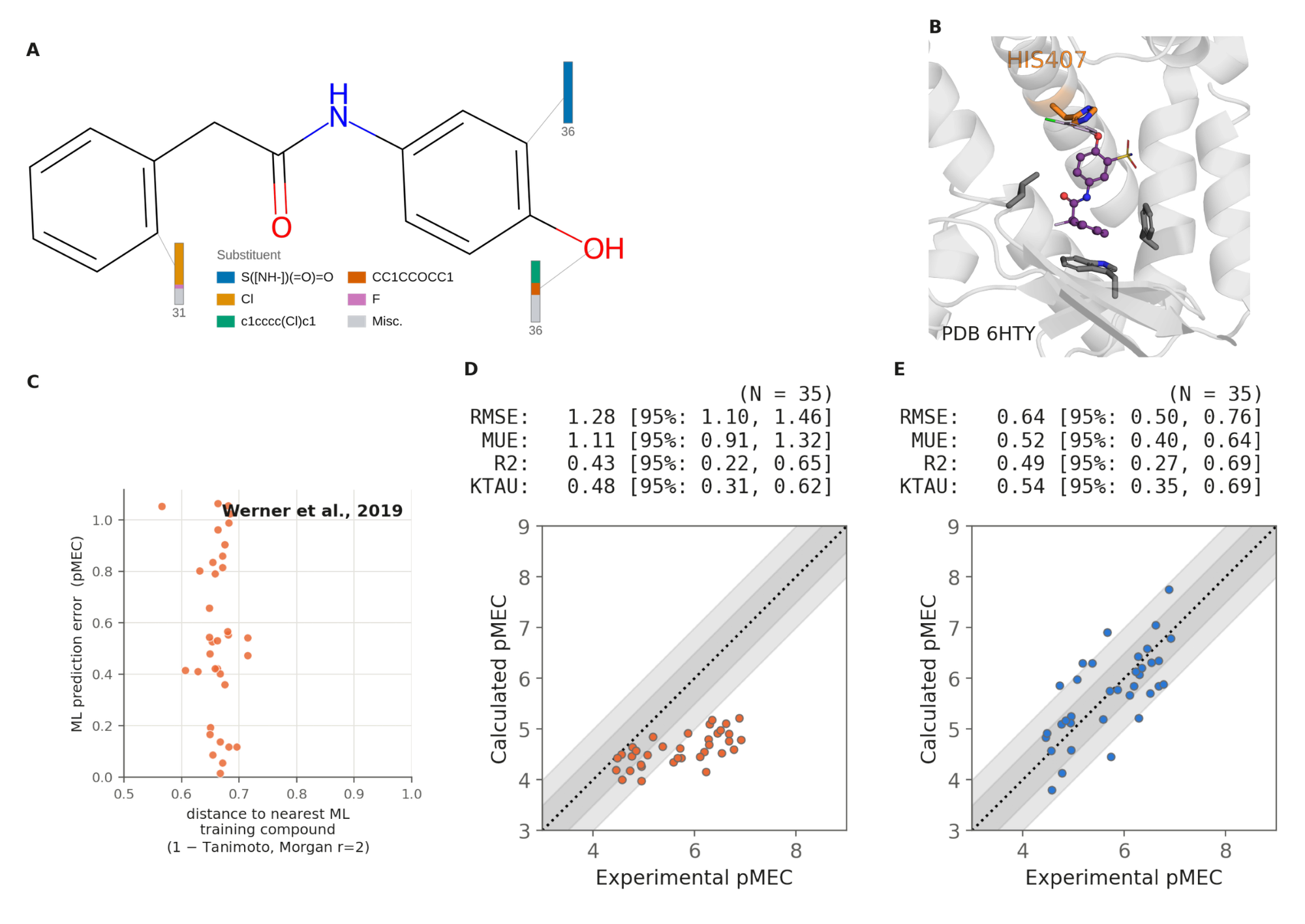
However, the set that we landed on has only 35 compounds - keen readers will note that Schrödinger worked on 42 compounds. This is due to a mismatch in setting up the calculations for this set: we worked directly off ChEMBL. Compared to Schrödinger's series, we removed 11 compounds that had censored data or were estimated too challenging to pose. Schrodinger in turn, relative to our n=35 series, omitted 4 compounds. Regardless, forcing our own posing workflow on Schrödinger's inputs (an IFD-MD structure of PXR) and exact n=42 series does not produce as satisfying of a result: they report RMSE of 0.60 log units and an R2 of 0.54 (recalculated from the SI data) whereas our RBFE method only reached 0.93 and 0.35, respectively. A more true benchmark between the two methods would be to run OpenFE with Schrödinger's full set of compound poses.
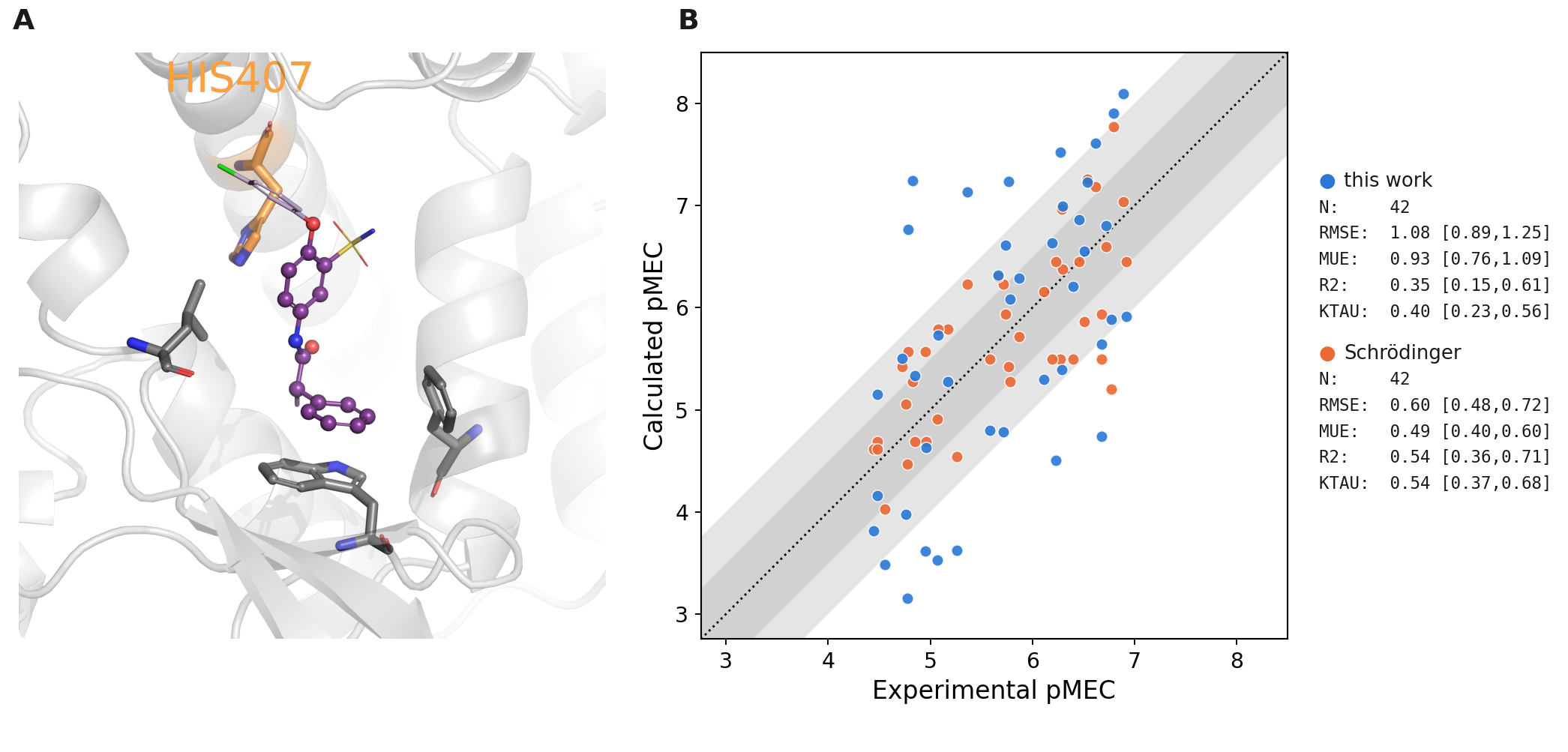
While the Werner et al. series is also measured in a cell-based reporter assay, we hypothesize that within this tightly congeneric series, where compounds likely share both binding mode and mechanism of activation, the cellular readout tracks binding affinity more faithfully than it did for the chemically more varied challenge subseries. We aim for untangling this further using upcoming OpenADMET PXR TR-FRET data.
OpenADMET is leveraging alchemical methods’ benefits for future targets
In this blog post, we show three applications of alchemical methods to compound series targeting the pregnane X receptor. Each series has its own challenges, but the general lesson is that alchemical methods and RBFE are hard to get right. They are hard to get right because of the complex physics underlying these systems. We also argue that although getting the physics right is hard, once you land on a set of parameters that gives an RBFE signal, you unlock a predictive model agnostic to the novelty of the chemical matter explored. This is the main attraction of alchemical methods, and why we at OpenADMET are looking to unlock this method for more targets. The primary outputs here are the tips and tricks we use to get these systems working, which we hope will benefit you. Other, more general work is available for this exact purpose; for example, see Schrödinger’s work from a few years ago.4
While we move on to other targets beyond PXR, stay tuned for more announcements from our side. New targets to explore mean new challenges and exciting science to share, as always: fully open.
Data & Code availability
All inputs for RBFE, RBFE settings and methods, and data-processing and plotting code are available in this MIT-licensed repository.
[1] Lin, W.; Huber, A. D.; Poudel, S.; Li, Y.; Seetharaman, J.; Miller, D. J.; Chen, T. Structure-guided approach to modulate small molecule binding to a promiscuous ligand-activated protein. Proceedings of the National Academy of Sciences 2023, 120 (10), e2217804120. https://doi.org/10.1073/pnas.2217804120.
[2] Jill E. Chrencik et al, Structural Disorder in the Complex of Human Pregnane X Receptor and the Macrolide Antibiotic Rifampicin. Molecular Endocrinology, Volume 19, Issue 5, 1 May 2005, Pages 1125–1134, https://doi.org/10.1210/me.2004-0346
[3] Hwang, H. et al, Accelerating Lead Optimization Away from Anti-Targets: Navigating the Structural Complexity of Promiscuous ADMET Proteins. Journal of Chemical Theory and Computation 2026. https://doi.org/10.1021/acs.jctc.6c01007.
[4] César de Oliveira; Karl Leswing; Shulu Feng; René Kanters; Robert Abel; Sathesh Bhat. FEP Protocol Builder: Optimization of Free Energy Perturbation Protocols Using Active Learning. J. Chem. Inf. Model. (2023) 63 (17): 5592–5603. https://doi.org/10.1021/acs.jcim.3c00681